

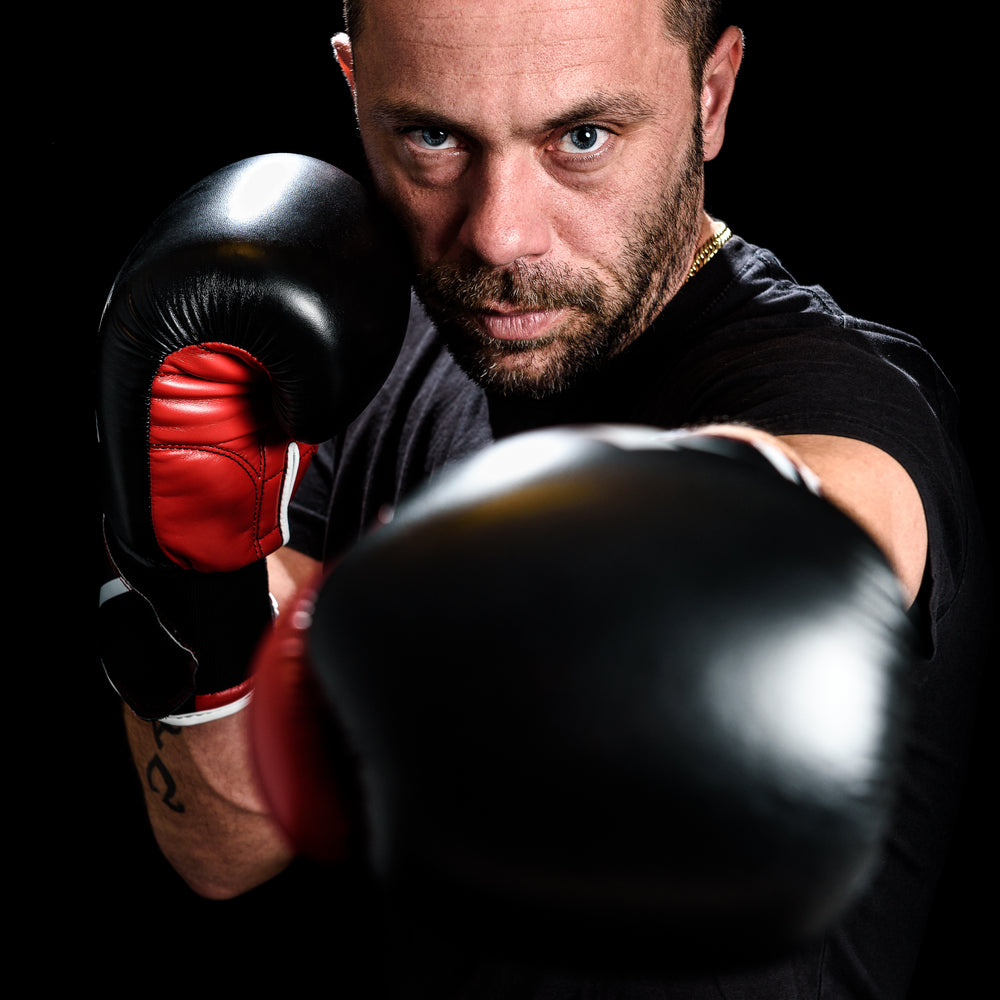
What Boxing Equipment Do I Really Need to Start as a Beginner?
To start boxing as a beginner, you only need three things: hand wraps, a pair of training gloves (12–16 oz), and a mouthguard if you'll be doing any contact work. If you're training at home, add a heavy bag. Everything else — boxing shoes, headgear, specialist gloves — is an upgrade you earn later, not a day-one purchase.
That's the honest answer, and it's the one we give every beginner who walks into the gym. The industry wants to sell you a full kit on day one. You don't need it. Here's exactly what to buy, what to skip, and what each piece actually does.
What are the absolute essentials to start boxing?
Strip it back and there are only three non-negotiables for your first month:
- Hand wraps — These protect the 27 small bones in each hand and lock your wrist into a stable line on impact. No glove, however padded, replaces them. Around €8–15.
- Training gloves (12–16 oz) — Your all-rounder for bag work, pads and light sparring. A solid pair runs €40–70 to start.
- Mouthguard — Only essential the moment you make contact with a partner, but cheap insurance (€10–25) and worth having early.
If you're joining a gym, that's genuinely your whole list — most gyms have bags, pads and a coach. If you're training at home, you'll also want a heavy bag. That's it. You can walk into your first session properly equipped for roughly €60–110.
Find first-pair options in our boxing gloves collection and hand wraps.
Why do I need hand wraps if the gloves are already padded?
This is the most common beginner mistake we see: skipping wraps because "the gloves do the job." They don't do the same job.
Gloves cushion the impact. Wraps support the structure — they compress the small bones of your hand into one solid unit and hold your wrist straight so it doesn't bend on a hard shot. Punch a bag without wraps and you're risking sprained wrists and bruised knuckles within weeks.
For beginners, you've got two options:
- Traditional wraps (cotton/elastic, ~450 cm / 180") — More support, fully customisable, what most fighters use long-term. A small learning curve to wrap.
- Quick wraps / gel wraps — Slip on like a glove in seconds. Easiest for total beginners, slightly less wrist support.
Start with whichever you'll actually use. A pair you can wrap in ten seconds beats a "better" pair sitting in your bag. Browse both in hand wraps.
What size gloves should a beginner buy?
Glove size is measured in ounces (oz) — that's the weight of the padding, not the fit. More oz means more protection, not a bigger hand opening.
For a single all-round first pair, here's the field-tested guide:
| Your bodyweight | All-round training glove | If you'll spar |
|---|---|---|
| Under 60 kg | 12 oz | 14 oz |
| 60–85 kg (most adults) | 14 oz | 16 oz |
| Over 85 kg | 14–16 oz | 16 oz |
Rule of thumb: if you buy one pair, 14 oz covers bag, pads and light sparring for most adults. The moment you commit to regular sparring, get a dedicated 16 oz pair — the extra padding protects your training partner, which is the whole point of sparring gloves.
Don't buy 8 or 10 oz gloves as a beginner. Those are competition weights with minimal padding — they'll punish your hands on the bag.
Leather or synthetic gloves — which should a beginner choose?
Both work. The difference is lifespan and budget.
- Synthetic (PU): €30–70. Little to no break-in, perfectly durable for someone training a few times a week. The smart beginner buy.
- Genuine leather: €80–200+. Lasts years, breathes better, moulds to your hand. The upgrade once you know you're sticking with the sport.
Our honest take from the gym floor: a quality synthetic pair in the €40–70 range is the right first purchase. Train consistently for a few months, learn your size and discipline, then invest in leather. You'll get more out of it once you know what you want. See the full range in our boxing gloves collection.
Do I need a punching bag, and which one?
Only if you're training at home — a gym already has them. If you are kitting out a home setup, the bag is your biggest decision:
- Hanging heavy bag — Authentic feel, natural swing, best for technique. Needs a solid ceiling joist or a bag stand.
- Freestanding bag — No drilling, ideal for renters; moves a little under power shots but hugely convenient.
Size it to your training: a bag roughly half your bodyweight suits most adults (around 30–45 kg for bag work). Go longer (150–180 cm) if you're throwing kicks for kickboxing or Muay Thai, shorter for pure boxing. Many bags ship empty to save on shipping — see our note on filling below. Browse options in punching bags.
What gear can a beginner safely skip at first?
Just as important as what to buy is what to ignore until you're ready:
- Boxing shoes — Clean trainers are fine to start. Boots add ankle support and grip once you're sparring or competing. → boxing shoes when you progress.
- Headgear — Only needed for sparring, and your gym usually sets the standard.
- Separate bag gloves — Your training gloves handle the bag fine early on. Specialise later.
- Specialist competition gloves — Fight-night gear, not training gear.
Buying these on day one is money spent on performance you can't yet use. Spend it on a better pair of gloves instead.
What does a complete beginner kit cost — and what should I prioritise?
Here's where to put your money, in order:
- Hand wraps (€8–15) — Buy first. Never train without them.
- Training gloves, 14 oz (€40–70) — Your core purchase. Don't go below €40.
- Mouthguard (€10–25) — Before your first sparring session.
- Heavy bag (€60–150) — Only if training at home.
- Later: shoes, headgear, sparring-specific 16 oz gloves.
A gym-goer is fully kitted for €60–110. A home setup runs €120–250 with the bag. That's everything you need — and nothing you don't.
Frequently Asked Questions
Do I really need a mouthguard if I'm just hitting the bag? Not for solo bag work — but the moment you spar or do partner drills, it's essential. It's cheap, so most people buy it early and keep it in the bag.
Can I use the same gloves for everything when I start? Yes. A single 14 oz training pair handles bag, pads and light sparring while you learn. Add dedicated 16 oz sparring gloves once you make regular contact.
What should I fill my punching bag with if it arrives empty? Pack it firmly with old textiles/clothing for a softer feel, adding a little sand toward the bottom for weight. Avoid loose sand throughout — it settles hard and can hurt your hands and wrists.
How much should a complete beginner spend? Around €60–110 for a gym setup (wraps, gloves, mouthguard), or €120–250 for a home setup with a bag. Spend the most on your gloves and wraps — they protect you.
Built for Champions — Start Right at LEGEND Sports
You don't need a full arsenal to throw your first punch. You need wraps, a solid pair of gloves, and the will to show up. Get the essentials right and the rest follows. Shop our boxing gloves collection, grab your hand wraps and mouthguards, and add a punching bags if you're training at home — all tested where it counts, in real gyms, by real fighters.
Free EU shipping on all orders over €100. Kit up, show up, and put in the work.


